

Obsession Analysis
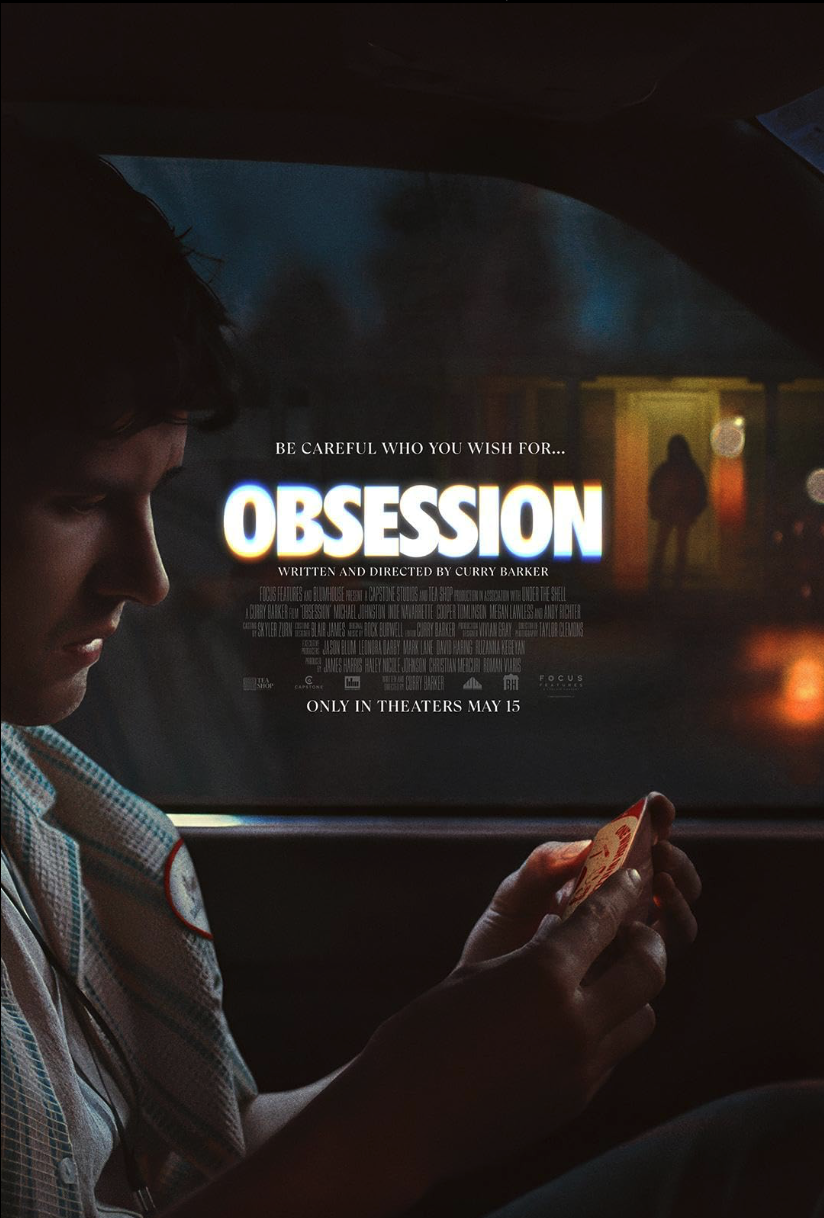
Obsession is a movie that will live with you long after you have seen it. Not because it was groundbreaking, or because it reinvented horror, but because it perfected it. More impressively, it accomplished the hardest thing of all in the genre: putting the narrative first.
When you pause to reflect on what is actually happening in this film, it sinks deeper into you with every thought. Obsession is not simply scary for the sake of being scary. It is a rich and thoughtful allegorical exploration of disastrous relationships, emotional entitlement, autonomy, and the terrifying consequences of love stripped of humanity.
Let’s walk through it from the very beginning.
Bear, the film’s main character, is a deeply emotional and fragile individual. The film opens with him confessing his love for Nikki, played by Inde Navarrette, though it is quickly revealed that the woman he is speaking to is not Nikki at all, but a waitress at the restaurant where he is sitting with his friend Ian. Immediately, the audience is clued into something important: Bear is profoundly self-conscious, so consumed by anxiety and fear of rejection that he cannot even bring himself to genuinely speak to the woman he imagines spending his life with. That insecurity becomes the single most important driving force for everything that follows.
Within the first few minutes, it also becomes clear that Bear is not only emotionally fragile, but emotionally irresponsible. This is illustrated vividly through his improper disposal of a dead cat and his habit of coping by obsessively staring at photos of Nikki rather than engaging with the real world around him. Upon learning that Nikki is leaving the music store where they spend much of their time together, Bear finally resolves to confess his feelings.
It is at a gift shop, of all places, where his character is most sharply revealed. He purchases the “One Wish Willow,” a magical item said to grant one wish to whoever breaks it, not because he believes Nikki would love it, but simply because he does. It is a small moment, but an incredibly revealing one. Even his “gift” to Nikki is still, fundamentally, about himself.
Shortly after a failed attempt to confess his feelings, Bear acts out of desperation and wishes that Nikki would love him more than anyone else in the world. One might immediately flag this as selfish, and while that is a fair reading, Bear initially has no reason to believe the wish will actually work. That distinction is important because it prevents him from becoming a cartoon villain from the outset. He is not malicious. He is lonely, emotionally immature, and desperate for certainty.
But what follows is where the film becomes extraordinary.
As the wish takes hold, Nikki visibly struggles between her authentic self and the influence of the One Wish Willow. This is the moment the film spirals into chaos, as director Curry Barker masterfully explores autonomy, consent, obsession, and the horrifying consequences of wanting love without vulnerability.
And this is where the true horror of Obsession reveals itself.
The horror is not Nikki’s increasingly disturbing behavior. The horror is Bear’s response to it.
Throughout the film, Nikki repeatedly cries out for help. She insists that this is not who she is. She begs for release. At one point, she even directly tells Bear, “I don’t like this, please kill me.” The film makes it painfully obvious that some part of the real Nikki still exists beneath the influence of the wish, trapped inside herself and fully aware of what is happening to her.
And Bear knows it.
That is the moment the audience’s relationship with him fundamentally changes.
What makes Bear such an effective and disturbing character is that he is not evil in the traditional sense. He is not sadistic or calculating. He is passive, cowardly, and selfish in deeply human ways. He continually chooses gratification over accountability, comfort over empathy, and emotional fulfillment over Nikki’s autonomy. Once he understands the cost of the wish, he still cannot let go of what it gives him.
Bear is eventually told that the only true way to end the wish is through death. While it is understandable that he does not immediately choose suicide, what becomes horrifying is how little urgency he shows toward truly helping Nikki at all. He does not desperately seek alternatives. He does not meaningfully try to restore her autonomy. He does not even appear willing to fully confront the moral weight of what he has done. Instead, he almost immediately begins rationalizing ways to coexist with the nightmare he created. The audience slowly realizes something deeply unsettling: if Nikki had never escalated into violence, Bear likely would have allowed the arrangement to continue forever.
That realization fundamentally reframes the film.
The tragedy is no longer that Bear accidentally made a terrible wish. The tragedy is that Bear ultimately preferred artificial love to honest rejection.
There is a particularly horrifying scene in which Bear and Nikki sleep together after it is already implied that Bear understands the wish is harming her. Nikki’s face communicates sadness, emptiness, and violation, while Bear’s communicates only satisfaction. It is arguably the emotional point of no return for his character. Up until then, the audience can still rationalize his behavior as confusion or denial. But in that moment, the film makes something devastatingly clear: Bear now understands the suffering involved, and he proceeds anyway.
That single scene encapsulates the entire thematic core of the movie.
Bear does not truly love Nikki. He loves what being loved by Nikki gives him.
That is why Nikki’s repeated line, “Do you love me? You don’t love me like I love you!” becomes one of the film’s most brilliant and tragic pieces of dialogue. On the surface, it is the obsessive influence of the wish speaking through her. But beneath that, it also feels like the real Nikki crying out a painful truth. If Bear truly loved her, he would care about what this relationship is doing to her. Instead, he continually prioritizes his own fear of rejection over her wellbeing.
What makes Nikki’s transformation so deeply unsettling is that the film carefully establishes who she was before the wish ever took hold. Nikki is not introduced as emotionally unstable or obsessive. In fact, she explicitly says, “When I like a boy, no one knows.” It is a deceptively small line that reveals something enormously important about her character. Nikki is emotionally restrained, self-possessed, and fully in control of herself. She experiences emotion deeply, but she governs it privately and intentionally. She has emotional sovereignty.
The wish destroys that sovereignty.
Rather than turning Nikki into a traditionally monstrous horror antagonist, the film instead portrays her emotional collapse. Wish Nikki is not constantly angry or demonic. She is emotionally volatile, desperate, needy, weepy, and overwhelmed by feelings she can no longer regulate. That is precisely why her transformation feels so horrifying. The audience is not watching a woman become evil. They are watching a woman lose herself.
Every crying outburst, every desperate plea for reassurance, every humiliating emotional spiral becomes uncomfortable because the audience constantly remembers who Nikki originally was. The contrast is heartbreaking. The composed, generous, emotionally grounded woman from the beginning of the film is slowly being replaced by someone incapable of controlling her own mind or behavior.
And through it all, Bear allows it to continue.
The film repeatedly demonstrates that Bear wants the reward of love without the vulnerability that real love requires. He wants certainty without risk. Possession without rejection. Even when confronted with opportunities to undo the wish, he avoids taking true responsibility for his actions. When speaking with the makers of the One Wish Willow, he asks if the wish can be altered rather than fully undone. Again, his concern is not restoring Nikki’s autonomy. It is managing her behavior more conveniently.
That cowardice becomes increasingly catastrophic.
At one point, Nikki murders another woman who shows interest in Bear, only to make it painfully clear that Bear himself is responsible for what has happened. And she is right. Bear knowingly continues placing others in danger because he cannot fully relinquish the emotional validation the wish provides him. Even his attempts to “fix” the situation are rooted in avoidance. Rather than directly confronting the consequences of his actions, he repeatedly searches for ways to escape accountability while still preserving some version of the relationship.
All of this culminates in death and destruction: the deaths of Bear and his friends, and the complete unraveling of Nikki’s life. Even when she eventually regains some degree of autonomy, it is far too late. She has been transformed into both victim and unwilling participant in horrific acts, all while trapped inside herself.
What makes Obsession so terrifying has nothing to do with makeup, loud music, or jump scares. It is terrifying because of how emotionally truthful it feels. The film weaponizes empathy against the audience itself. It introduces Bear as someone awkward, lonely, and relatable, encouraging viewers to root for him and hope he “gets the girl.” But slowly, almost imperceptibly, the film forces the audience to confront a horrifying realization:
Love without respect for autonomy is not love at all. It is possession.
And that is why Obsession lingers long after the credits roll.
Obsession is ultimately a brilliant reimagining of the monkey’s paw. Not the idea that wishes themselves are cursed, but the far more unsettling truth that cursed thinking is its own kind of prison. Bear’s power did not corrupt him. It simply revealed who he already was.
And that is the film’s truest and most lasting tragedy